Chinook Salmon Lake Ontario: Master Trolling Depths, Flasher Spreads, and Trophy Kings
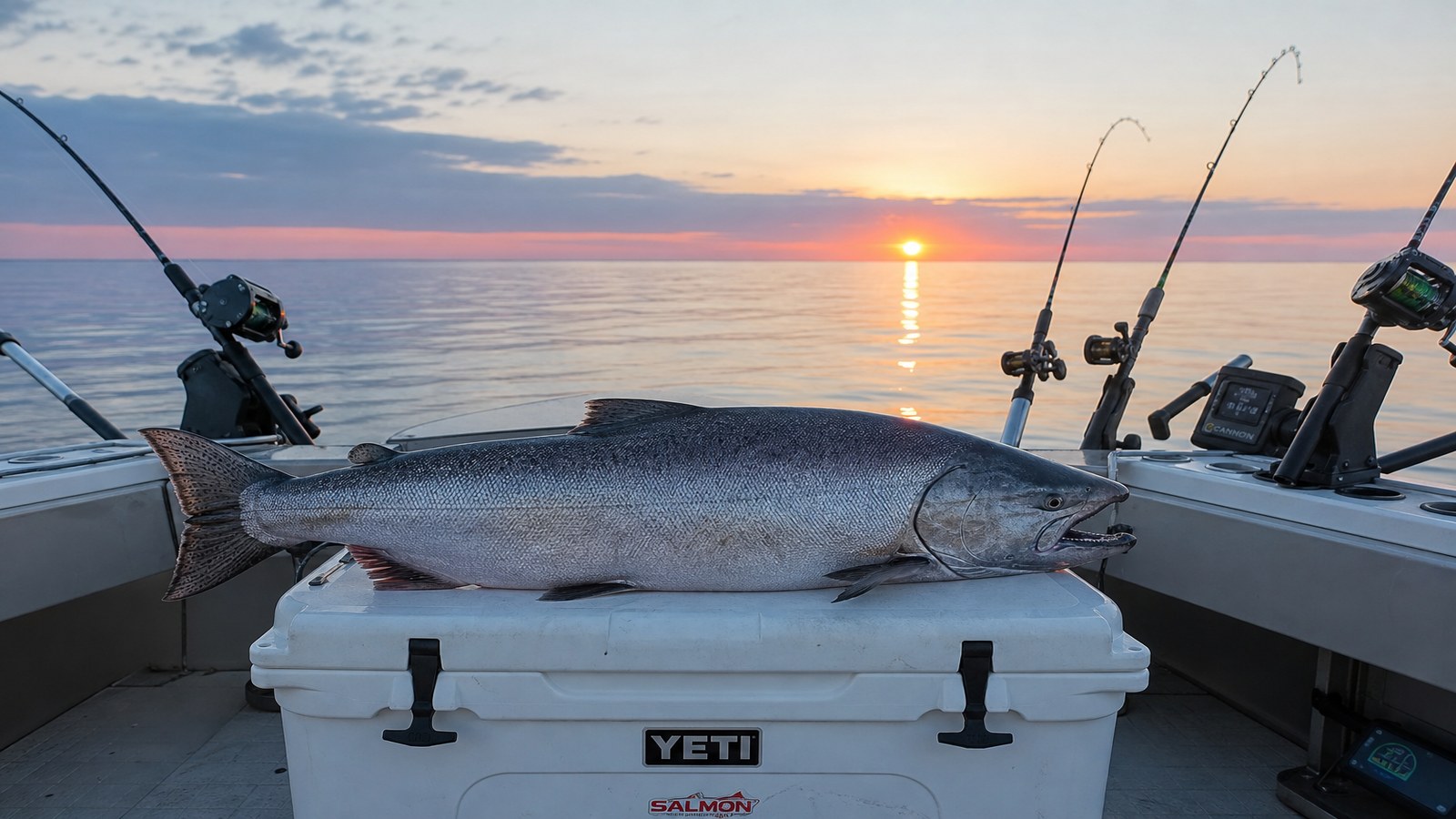
For dedicated freshwater big-game anglers, chasing trophy chinook salmon lake ontario represents the absolute pinnacle of Great Lakes sport fishing. Introduced in the late 1960s, Chinook salmon adapted rapidly to Lake Ontario's deep, cold waters and vast populations of pelagic alewives. Today, these apex predators frequently surpass the 30-pound mark, known locally as "kings" for their sheer bulldogging strength, sizzling 100-yard runs, and arm-straining endurance behind heavy offshore trolling gear.
Seasonal Migrations of Chinook Salmon Lake Ontario
To put trophy fish in the boat, anglers must adjust their trolling coordinates and depths as water temperatures change through the season:
Spring Thermal Bar (April to May)
As spring sun warms nearshore shallow water faster than the main lake basin, a vertical temperature boundary known as the thermal bar forms. Plankton blooms concentrate massive schools of alewives in 20 to 50 feet of water near shorelines and river mouths. Chinook follow these bait schools closely. Charter captains troll shallow-diving minnow plugs and light flutter spoons off offshore planer boards and light downriggers along visible water-clarity breaks.
Summer Thermocline Mastery (June to Mid-August)
By mid-summer, surface water temperatures rise into the upper 60s and 70s, driving cold-water Chinook down into the thermocline. Kings prefer water between 48 and 54 degrees Fahrenheit, which typically sits between 50 and 110 feet down over 150 to 400 feet of open water. Downriggers and directional wire divers become the primary producers, placing attractors directly through active feeding schools.
Late Summer River Mouth Staging (Late August to September)
Mature three- and four-year-old salmon stage in 60 to 120 feet of water outside major tributaries like the Credit River, Ganaraska River, and Niagara River. Dawn and dusk bite windows are electric, as staging kings aggressively attack glowing spoons, flasher spreads, and cut-bait rigs in shallow transition waters.
Proven Spreads for Chinook Salmon Lake Ontario
Trolling open water requires coordinated multi-rod spreads that simulate schools of fleeing baitfish:
1. Electric Downriggers with Cannonballs
Downriggers allow precise depth control without adding heavy sinkers directly to your fishing line. Running 12 to 16-pound streamlined weights keeps blowback to a minimum at trolling speeds between 2.2 and 2.8 knots. Spoons like Northern King, Dreamweaver, or Michigan Stinger run 10 to 25 feet behind downrigger clips, fluttering with an erratic wobble that triggers vicious reaction bites.
2. Wire Line Dipsy Divers
Directional divers spooled with 30-pound braided wire plane outward away from the boat hull, covering water outside the prop wash. Wire transmits every vibration cleanly and cuts through deep currents. Rigging 8-inch or 11-inch flashers with buzzing green, white, or glow trolling flies behind a diver is responsible for many of the heaviest king salmon landed on the lake.
3. Meat Rigs with Cut Bait
When summer kings become wary or selective, running three-teaser meat rigs baited with fresh-frozen herring strips behind a 12-inch flasher produces strikes from the largest fish in the school. The natural scent and rolling action of real baitfish often converts follows into aggressive hookups.
Top Canadian Ports for Lake Ontario Kings
Excellent charter operations depart from full-service marinas along the entire northern shore:
- Port Credit (Mississauga): Offers immediate access to deep water and consistent early summer king fishing right outside Toronto harbor.
- Bluffer's Park (Scarborough): Famous for deep underwater drop-offs along the Scarborough Bluffs holding dense schools of baitfish all summer.
- Whitby and Bowmanville: Central shoreline hubs providing short boat runs to productive 200-foot contour lines.
- Port Hope and Cobourg: Premier late-summer destinations positioned right where mature kings stage before running the Ganaraska River.
- St. Catharines and Jordan Harbour: Located near the mouth of the Niagara River, offering great spring and mid-summer action.
Tackle Tuning and Speed Control for Lake Ontario Kings
Big-water Chinook salmon test every link in your setup. Dialing in precise speed and terminal tackle makes the difference between consistent action and empty passes:
- Downrigger Speed and Temp Probes: Surface water speed rarely matches underwater current speed 80 feet down. Using a downrigger sensor probe to maintain a lure speed between 2.2 and 2.6 knots ensures spoons and meat rigs roll with the correct enticing cadence.
- Shock Leaders and Snubbers: A violent king salmon strike can snap tight lines instantly. Wire-line diver setups require heavy-duty rubber snubbers positioned ahead of flashers to cushion headshakes, while 30-foot fluorocarbon leaders absorb shock on braid-spooled reels.
- Glow Spoons for Low-Light Hours: In early dawn or late dusk staging windows, charge glow-in-the-dark spoons with a high-powered UV flashlight. High-contrast glow finishes pull aggressive kings from deep darkness.
Booking a Verified Charter on Zoop Guide
Navigating Lake Ontario's big-water swells, shifting thermal layers, and coastal fog requires experienced captains and seaworthy commercial vessels. Booking through Zoop.guide connects you with licensed, commercially insured skippers equipped with radar, CHIRP sonar, and tournament tackle.
When you are ready to battle powerful chinook salmon lake ontario, discover verified charter boats and captains on Zoop.guide. Compare transparent packages, read verified reviews, and book your Lake Ontario fishing trip directly on Zoop.guide.