Lake Ontario Salmon: Big-Water Downrigger Trolling, Thermoclines, and Flasher Spreads
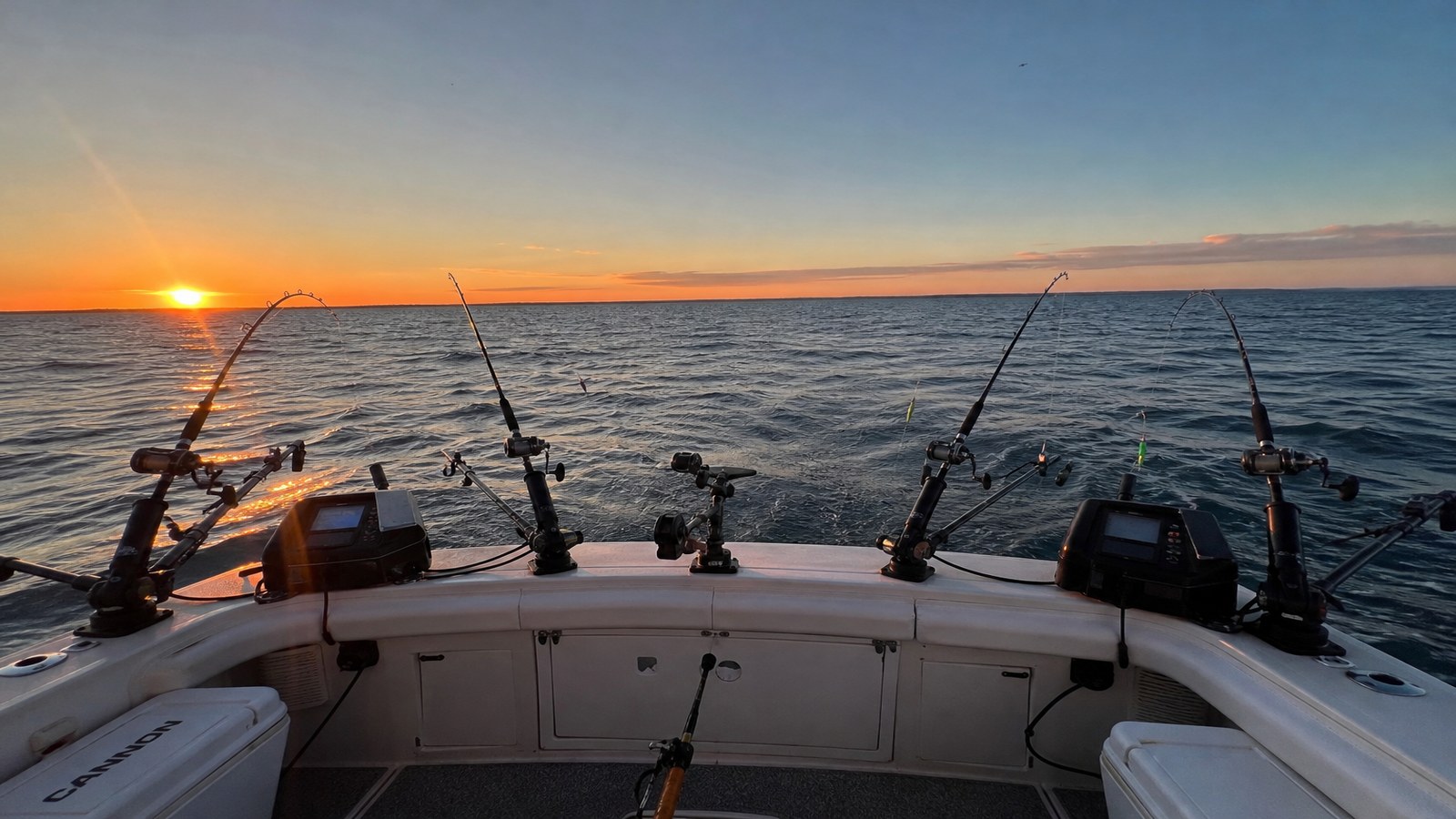
Few freshwater fisheries on earth match the sheer scale and trophy caliber of targeting lake ontario salmon. Spanning over 18,000 square kilometers, Lake Ontario provides an ocean-like playground for Chinook salmon, coho salmon, Atlantic salmon, rainbow trout (steelhead), and brown trout. With an abundant forage base of pelagic alewives and deep, cold waters, Lake Ontario is globally recognized as a premier destination for big-water trolling charters and arm-straining battles with 30-pound king salmon.
The Life Cycle and Habits of Lake Ontario Salmon
To consistently catch salmon on Lake Ontario, anglers must understand how these pelagic fish navigate open water throughout the spring and summer:
1. Following the Thermal Bar and Bait Schools
In early spring (April and May), nearshore water warms faster than the deep lake basin, creating a distinct temperature boundary known as the thermal bar. Dense schools of alewives migrate into shallow bays, and hungry salmon follow them closely. Anglers troll shallow waters in 15 to 40 feet of water, pulling stickbaits and small spoons off planer boards right along shoreline mud lines.
2. The Summer Offshore Thermocline (June through August)
By mid-summer, surface waters warm into the 70s, forcing cold-water salmon deep into the water column. Salmon position themselves in and directly below the thermocline (the sharp transition zone between warm surface water and cold deep water, typically between 48 and 54 degrees Fahrenheit). Finding this temperature layer with a boat temperature probe or studying sonar marks reveals the exact depth where active fish are feeding.
3. Late Summer Staging Outside River Mouths (Late August)
As mature salmon prepare for their autumn river migration, they begin staging in 50 to 120 feet of water outside major river deltas. Trolling these staging zones during low-light hours at dawn and dusk triggers aggressive reaction bites from mature fish.
Core Trolling Spreads and Proven Presentations
Charter captains on Lake Ontario operate coordinated multi-rod spreads designed to present lures at various depths without tangling lines:
Electric Downriggers
Downriggers remain the foundation of big-water salmon fishing. Heavy 12 to 16-pound weights hold lines at exact depths from 30 down to 130 feet. Anglers run flutter spoons (Northern King, Moonshine glow spoons, Silver Horde) or cut-bait meat rigs 10 to 30 feet behind the release clip.
Wire Line Divers (Dipsy Divers)
Directional divers spooled with 30-pound braided stainless steel wire plane outward and downward away from the boat. The wire transmits vibration directly to the lure and slices through deep water currents with minimal resistance. Divers pulling 8-inch to 11-inch flashers paired with buzzing trolling flies account for a large percentage of king salmon strikes.
Copper and Lead-Core Lines
Weighted copper lines (such as 300-foot or 400-foot copper setups) fished off offshore planer boards run far away from the boat's motor noise. The stealthy presentation and distinct serpentine action of copper lines often entice the largest, wariest trophy kings.
Top Ports Along the Ontario Coast of Lake Ontario
Charter fleets operate out of well-equipped full-service marinas across the northern shoreline:
- Port Credit and Mississauga: Located in the western basin, Port Credit offers immediate access to deep-water drop-offs and strong summer salmon runs within minutes of leaving the dock.
- Bluffer's Park (Scarborough): Famous for the dramatic Scarborough Bluffs, this port provides fast boat runs to deep trenches where baitfish stack throughout mid-summer.
- Whitby, Oshawa, and Darlington: Central shoreline ports known for consistent mid-summer king salmon action and reliable open-water fishing.
- Cobourg and Port Hope: Eastern ports situated near major staging grounds, providing exceptional late-summer action as kings stage before entering the Ganaraska River.
- St. Catharines and Niagara: Located near the mouth of the Niagara River, this area features dynamic current lines and early-season king action.
- Wellington and Prince Edward County: Renowned for trophy fish holding along deep underwater contours in the eastern lake basin.
Reading Marine Electronics and Offshore Currents
Success on Lake Ontario depends heavily on modern boat electronics:
- Sub-Surface Speed and Temp Probes: Surface water temperature often differs by twenty degrees from water down 60 feet. A downrigger probe measures water temperature and current speed at lure depth, ensuring your spoons flutter with optimal action.
- Chirp Sonar: High-frequency sound waves identify thermocline breaks and distinguish individual bait balls from trailing salmon arches.
Safety and Wave Preparation on Open Water
Lake Ontario develops steep, closely spaced waves when strong winds blow across its open expanse. Anglers booking charters should prepare for variable offshore weather by bringing waterproof layered clothing, polarized sunglasses to cut water glare, and non-slip deck footwear. Staying hydrated and taking preventative seasickness remedies ensures an enjoyable day on the water.
Planning Your Lake Ontario Charter Experience
Venturing out onto Lake Ontario requires navigating big-water swells, unpredictable fog, and changing wind directions. Booking a charter on Zoop.guide connects you with licensed captains operating Transport Canada certified boats equipped with modern radar, live color sonar, and tournament tackle.
When you are ready to battle powerful lake ontario salmon on the open water, browse verified charter boats on Zoop.guide. Compare trip durations, check boat amenities, read genuine reviews, and book your Great Lakes adventure directly on Zoop.guide.