Ontario Salmon: Great Lakes Trolling, River Migrations, and Trophy King Tactics
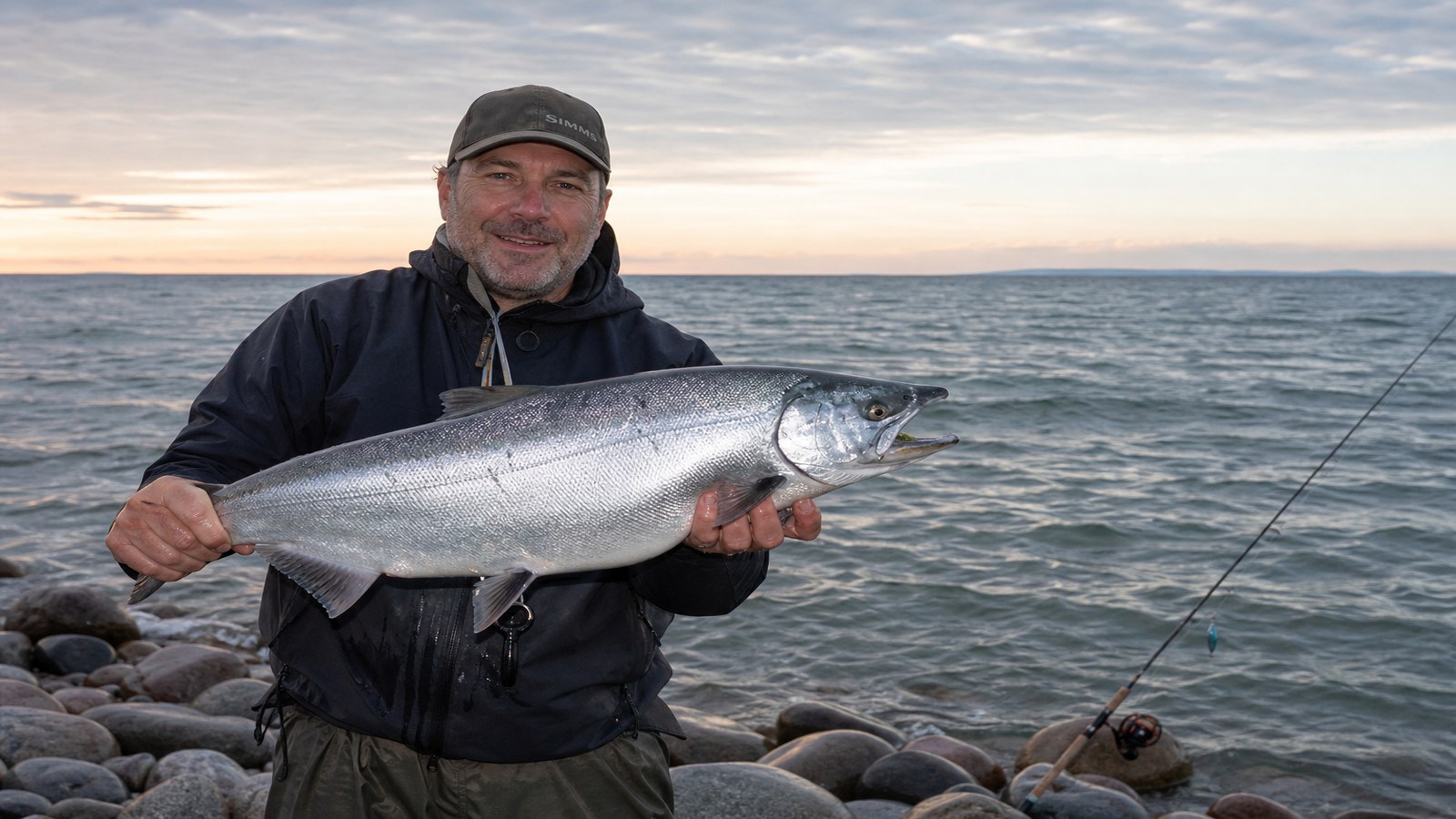
When anglers think of premier freshwater big-game angling, pursuing ontario salmon stands out as one of Canada's greatest success stories. Through decades of careful fisheries management, the province of Ontario has created a world-class sport fishery centered on Lake Ontario, Georgian Bay, Lake Huron, and their tributary river systems. Featuring Chinook salmon (kings), coho salmon, and native Atlantic salmon, Ontario offers both ocean-style offshore downrigger trolling and intimate river float fishing for fish exceeding 30 pounds.
The Great Lakes Arenas for Ontario Salmon
Targeting salmon in Ontario takes place across two very different aquatic settings:
1. Open-Water Lake Ontario Trolling
Lake Ontario is the premier salmon factory of the province. Deep, cold water and vast schools of alewives allow Chinook salmon to grow at extraordinary rates. From May through August, fleets of tournament-rigged charter vessels run spreads of downriggers, wire divers, and lead-core planer boards from ports like Port Credit, Whitby, Bowmanville, and St. Catharines, targeting active fish along the 48-degree thermocline.
2. Georgian Bay and Lake Huron
Georgian Bay provides deep, clear waters bordered by limestone cliffs and rocky islands. Salmon stage outside northern ports like Owen Sound, Collingwood, and Thornbury before entering pristine river systems like the Beaver and Sydenham rivers.
3. Autumn Tributary River Runs
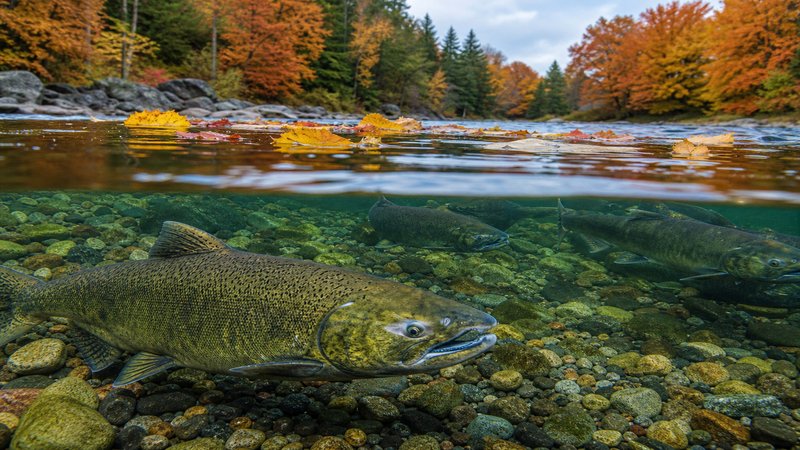
In September and October, hundreds of thousands of mature salmon enter freshwater rivers across southern and central Ontario to spawn:
- The Credit River: A premier GTA river offering accessible parkland fishing in Mississauga, famous for heavy runs of Chinook and coho.
- The Ganaraska River (Port Hope): Historic river town with a famous fish ladder where spectators and anglers watch giant salmon leap upstream through urban rapids.
- The Saugeen River: A major Lake Huron tributary renowned for wild, aggressive kings staging below the Denny's Dam.
- Bowmanville and Wilmot Creeks: Concentrated eastern tributary streams providing fast river action in compact public parks.
Proven Techniques for Ontario Salmon
Depending on whether you fish the open lake or shallow rivers, presentations differ dramatically:
Offshore Trolling Presentations
- Downriggers with Flutter Spoons: Light spoons (Northern King, Moonshine glow, Silver Horde) run 15 to 30 feet behind downrigger cannonballs placed between 40 and 100 feet down.
- Flasher and Fly Spreads: 8-inch to 11-inch rotating flashers paired with buzzing green, chartreuse, or mirage trolling flies pulled behind wire-line directional divers.
- Cut-Bait Meat Rigs: Three-teaser head rigs baited with natural herring strips produce strikes from mature trophy kings when fishing pressure is high.
River Float and Drift Tactics
- Centerpin Float Fishing: Long 11 to 13-foot float rods paired with centerpin reels allow long, frictionless drifts of cured salmon roe bags, artificial scented beads, or marabou jigs through deep holding pools.
- Casting Hardware: Pitching heavy inline spinners (like Blue Fox Vibrax size 5) or deep-diving crankbaits (Kwikfish) across river current seams triggers aggressive defensive bites.
River Run Flow Monitoring and Tackle Preparation
Understanding river flows is essential for timing the autumn push of Ontario salmon:
- Hydrographic River Gauges: Monitoring online provincial river gauges allows anglers to track cubic-meter-per-second water discharge. Rivers that spike after autumn rains and begin to gently drop offer peak migration conditions.
- Centerpin Reel Balancing: A balanced centerpin float outfit with properly spaced split shot prevents line twist and guarantees that your bait travels naturally at the current's floor.
- Stout Leader Materials: Heavy Chinook easily abrade light line on river shale and submerged wood. Use 10 to 12-pound fluorocarbon leaders to turn charging fish away from snags.
Care and Handling of Great Lakes Salmon Fillets
Proper field care ensures your salmon fillets taste clean and fresh. As soon as a salmon is landed for the table, bleed the fish immediately by slicing the gill arches and immerse it in clean river water or an icy slush bath. Great Lakes salmon fillets have rich fat lines along the skin and lateral line; trimming these darker sections before grilling, smoking, or baking yields mild, delicious table fare.
Conservation Ethics and River Etiquette
Ontario rivers see heavy angler pressure during peak autumn runs. Observing ethical practices preserves the fishery:
- Avoid Spawning Redds: Never fish over active, shallow spawning gravel. Target fresh fish holding in deep resting pools downstream.
- Use Single Barbless Hooks: Pinch down hook barbs to speed up releases and prevent tearing delicate mouth tissue.
- Pack Out Trash: Keep public parklands and riverbanks clean by packing out all discarded line, bait containers, and packaging.
Booking a Professional Charter on Zoop Guide
Whether you want to troll the deep expanse of Lake Ontario aboard a commercial charter boat or wade a scenic river valley with an expert centerpin guide, booking through Zoop.guide guarantees a safe, high-quality trip. Verified captains hold commercial marine insurance, Transport Canada safety certifications, and tournament-grade tackle.
When you are ready to battle powerful ontario salmon on the open lake or in rushing rivers, discover verified charter captains and guides on Zoop.guide. Compare transparent packages, read authentic reviews, and book your Ontario adventure directly on Zoop.guide.