Deep Sea Fishing Nova Scotia: Offshore Grounds, Giant Tuna, and Cod
Booking a charter for deep sea fishing nova scotia immerses anglers in one of the most productive marine ecosystems in the world. Jutting out into the North Atlantic, Nova Scotia sits at the dynamic intersection of the cold Labrador Current and the warm Gulf Stream. These colliding currents create nutrient-rich upwellings over offshore banks, attracting teeming schools of groundfish, pelagic sharks, and world-record class Atlantic bluefin tuna that make this maritime province an international sport-fishing destination.
Top Offshore Regions for Deep Sea Fishing Nova Scotia
Nova Scotia's coastline offers distinct marine fisheries from the Atlantic south shore to the northern straits:
1. Halifax and Sambro Bank (The South Shore)
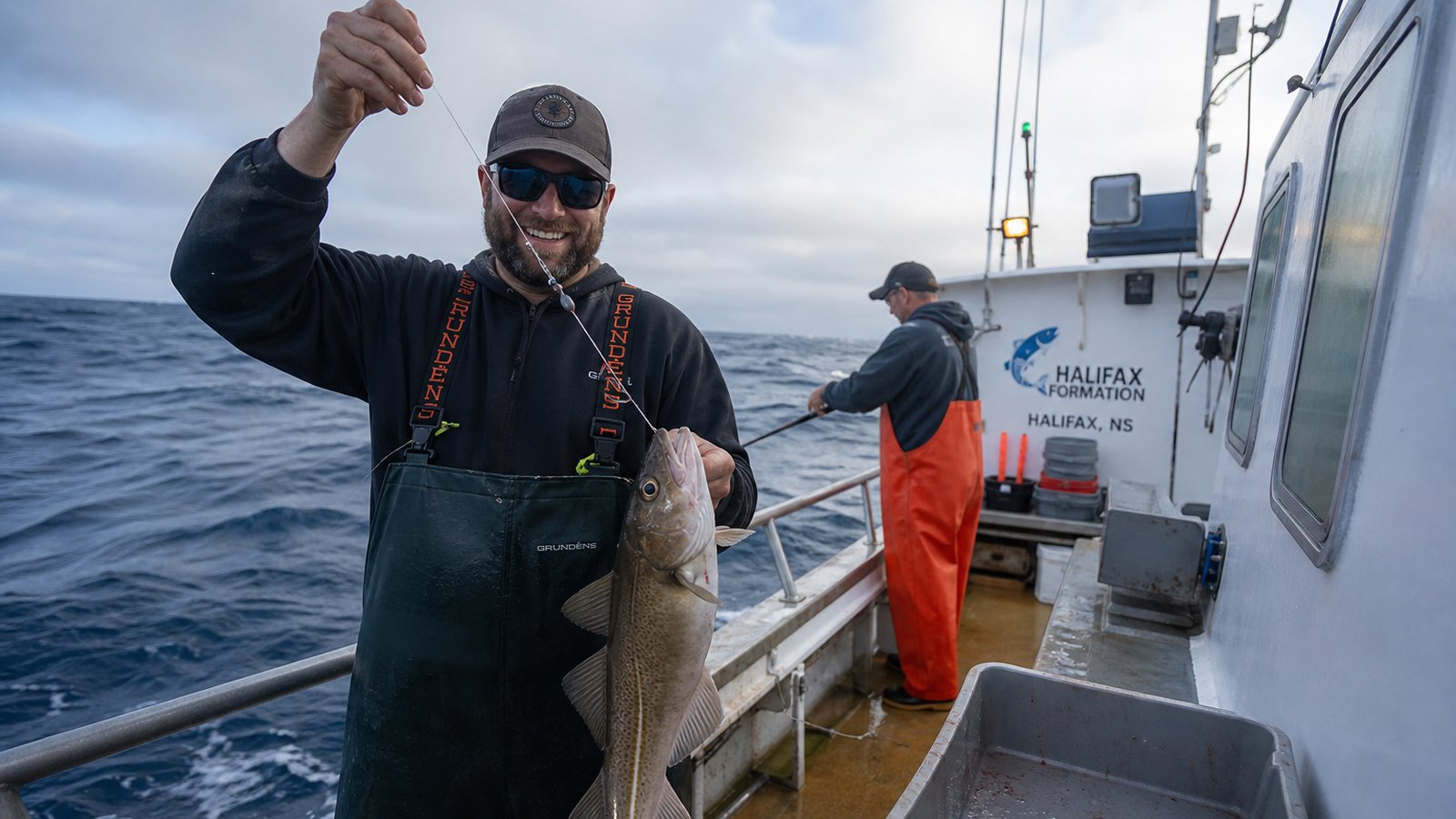
Departing from Halifax, Eastern Passage, or Sambro, offshore boats quickly access the legendary Sambro Bank and adjacent ledges. Depths drop from 120 feet to over 300 feet, holding dense schools of Atlantic cod, haddock, and ocean pollock. During late summer, warm offshore eddies draw blue sharks and porbeagle sharks within charter range for thrilling catch-and-release sport and tagging programs.
2. Northumberland Strait and St. Georges Bay
The Northumberland Strait between northern Nova Scotia and Prince Edward Island is globally celebrated as the giant bluefin tuna capital. Giant tuna congregate here from August through October to gorge on herring and mackerel, growing to weights exceeding 800 to 1,000 pounds. Charters use heavy 130-pound class bent-butt gear and fighting chairs under strict scientific catch-and-release guidelines.
3. Cape Breton and the Cabot Strait
Cape Breton's coastal waters plunge into deep ocean trenches right off rugged cliffs. Ports like Cheticamp, Ingonish, and North Sydney provide fast access to deep-water groundfish and migrating pelagics against the dramatic mountainous backdrop of the Cape Breton Highlands.
4. The Bay of Fundy and Digby Neck
Famous for extreme tidal ranges, the Bay of Fundy pushes immense volumes of water through deep channels. Charters departing from Digby and Brier Island target striped bass along coastal rips, winter flounder on sandy flats, and deep-water groundfish in churning current seams.
Target Species on Nova Scotia Deep Sea Charters
Nova Scotia waters offer exciting targets for both table-fare hunters and big-game sport anglers:
- Atlantic Haddock and Cod: The foundation of traditional Maritime bottom fishing. Haddock are easily identified by their black lateral line and shoulder smudge. They feed in schools over gravel bottoms at depths of 150 to 280 feet. High-low bait rigs tipped with fresh squid or salted herring produce fast action and firm white fillets.
- Atlantic Pollock (Boston Bluefish): Unlike cod that hug the seabed, pollock frequently suspend in mid-water over deep structure. Dropping heavy 8 to 12 ounce chrome diamond jigs and retrieving them with fast, rhythmic sweeps produces aggressive, arm-straining strikes.
- Giant Atlantic Bluefin Tuna: The ultimate challenge in big-game angling. Hooking a 700-pound bluefin on a live mackerel suspended from a kite tests angler endurance and teamwork during multi-hour battles.
- Blue Sharks and Mako Sharks: Offshore captains establish chum slicks along 60-degree temperature breaks, drawing blue sharks right to the boat's swim platform for sight-casting on 50-pound stand-up tackle.
Tackle and Equipment for Atlantic Depths
Tackling North Atlantic depths requires heavy-duty saltwater equipment:
- Braided Mainline: Monofilament line has too much elasticity for deep drops. Spooling 65 to 80 pound braided superline ensures crisp bite detection in 200 feet of water and cuts through ocean currents with minimal drag.
- Heavy Lead Sinkers: Bank sinkers and torpedo sinkers weighing 10 to 20 ounces are essential to hold bottom when boats drift across deep structure.
- Circle Hooks for Conservation: Captains frequently rig 5/0 to 7/0 circle hooks on 80-pound fluorocarbon leaders. Circle hooks set cleanly in the corner of the jaw, allowing fast, safe release of undersized groundfish.
Bluefin Tuna Conservation and Tagging Programs
Nova Scotia's Atlantic bluefin tuna fishery is recognized globally as a model of conservation-based sport fishing:
- Scientific Tagging Partnerships: Many Nova Scotia charter captains work directly with marine scientists and universities to place satellite tracking tags and conventional tags on caught tuna before releasing them. These studies track long-distance transatlantic migrations and habitat preferences.
- Specialized Barbless Circle Hooks: Regulations require single barbless circle hooks when targeting tuna, ensuring hooks lodge cleanly in the jaw without causing internal damage.
- Revival Protocols at Boat Side: Once a giant tuna is brought alongside the vessel, the captain keeps the boat idling slowly forward. This forces oxygen-rich water through the fish's gills, reviving the magnificent animal before the leader is clipped.
Catch Care, Filleting, and Culinary Traditions
Atlantic haddock and cod caught from cold Nova Scotia waters offer exceptional table quality when handled properly:
- Immediate Bleeding at Sea: Professional deckhands slit the throat or gill arch of caught haddock immediately upon landing. Bleeding the fish removes blood from the muscle tissue, resulting in snow-white, delicate fillets free of any fishy odor.
- Cold Slush Immersion: Bleeded fish are transferred straight into an insulated deck fish box filled with sea ice and clean saltwater. Rapid chilling preserves firm fillet texture during the run back to port.
- Dockside Cleaning: Upon returning to the wharf, the crew cleans, skins, and bags your fillets in food-grade plastic bags. Keep an insulated cooler in your vehicle with crushed ice ready to transport your fresh catch home.
Preparing for Weather and Atlantic Swells
The North Atlantic demands thoughtful preparation. Even during warm summer months, ocean temperatures remain cool:
- Dress in Layers: Wear thermal base layers, a warm fleece mid-layer, and heavy-duty waterproof bibs and jacket to stay warm against cold ocean spray and offshore breezes.
- Non-Slip Deck Footwear: Wear rubber deck boots with non-marking siped soles to maintain solid footing on rolling, wet boat decks.
- Preventing Motion Sickness: Take motion sickness medication before departing the dock, stay outside on the open deck facing the horizon, and drink plenty of water throughout the trip.
When you are ready to book world-class deep sea fishing nova scotia, turn to Zoop.guide. Browse verified local charter vessels, check captain licensing and safety certifications, read real customer reviews, and reserve your Atlantic trip directly on Zoop.guide.